
The Intoxicating History of MotoGP
The Intoxicating History of MotoGP starts in that the Isle of man at the first TT Trophy.
From post-war warriors to carbon fibre gladiators the premium story of motorcycle racing’s biggest, baddest championship
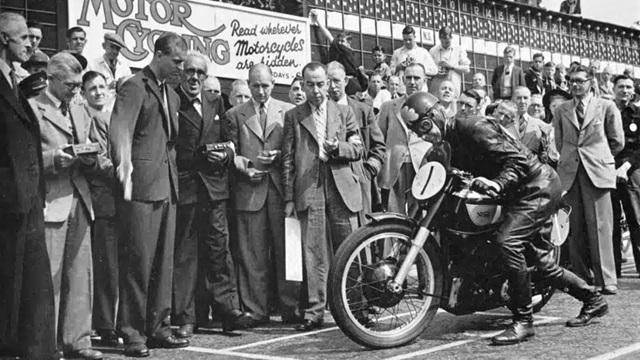
Factory Norton rider Artie Bell pushes off at the start of the first-ever MotoGP/500cc world championship race, the 1949 Senior TT, watched by the Duke of Edinburgh. Bell finished fourth, six minutes behind winning team-mate Harold Daniell
MotoGP teaches you that speed sounds like a song that you can’t stop replaying in your head. A violence and poetry to engines at full throttle: the crack of a downshift; the scream of acceleration; the sharp intake of breath when everyone waits for the lights to go out. MotoGP is motorsport distilled. There’s no roof. No roll cage. No vanity. Just rider and consequence, strapped to a bullet with things attached to it.
That sense of exposure makes the championship more visceral than most. But MotoGP wasn’t born in an age of telemetry screens and aerodynamic wings. It goes back to 1949 — Europe’s post-war reconstruction years — when the FIM first announced the Road Racing World Championship, which would later be known as the Motorcycle Grand Prix World Championship. The first season featured 125cc, 250cc, 350cc, and 500cc categories alongside sidecars, beginning the first Grand Prix weekend at the Isle of Man.
That was the spark. Everything since MotoGP’s inception has been fire.
Chapter I — Machines, Men…and Mayhem (1949–1960s)
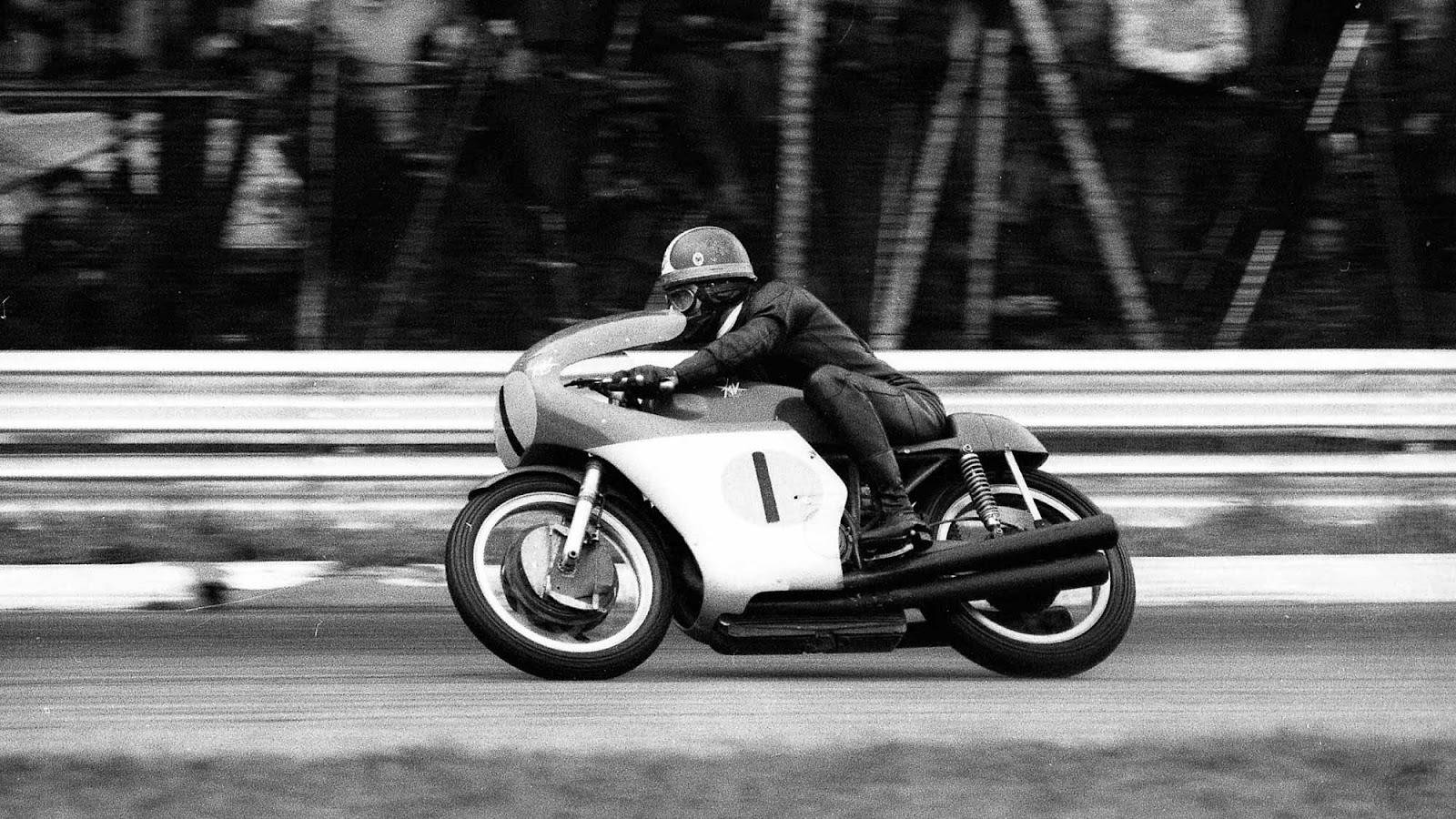
The earliest years of Grand Prix motorcycle racing look almost unimaginably romantic — and remarkably dangerous — by today’s standards.
Bikes were narrow. Frames were elegant. Riders wore less protective gear than most modern street motorcycles. Few circuits had expansive runoff or substantive barriers; unlike today’s digitally-rendered motorsport locations, GP circuits looked like public roads lined with walls. Public who often crowded close to those walls while countless threw themselves — and their motorcycles — at the same fate with wide eyes and skinny tyres.
Because the championship’s premier category was once 500cc, it wasn’t until two decades into its history that Grand Prix racing started to resemble MotoGP as we know it.
On any given weekend throughout the 1950s and 1960s, European marques squared off against each other in contests of technical innovation and stylistic bravado. Japanese manufacturers started to arrive towards the late-1960s, eventually overtaking their rivals to dominate the 1970s and early ’80s.
European factories and riders still came to winning to matter. They still came to motorcycle racing to build dynasties. But winners looked different too.
Achievement wasn’t just measured by who crossed the line first. It’s measured by who survived to cross the line at all. Reliability was consistency. Stamina was strength. Riders and machines were finely-tuned symbiotic systems.
You can still find MotoGP’s DNA in these chapters of its history:
technical innovation
high stakes
fantastical riders that made the brutal seem graceful.
Chapter II — Smooth Operators: Agostini, Read, and Late-Classic Legend
Think about the best racers you’ve ever watched. You’ll conjure images of win after calculated win. Championships. Eras.
In MotoGP’s golden era of the 1960s and 1970s, multiple manufacturers and riders transcended those categories.
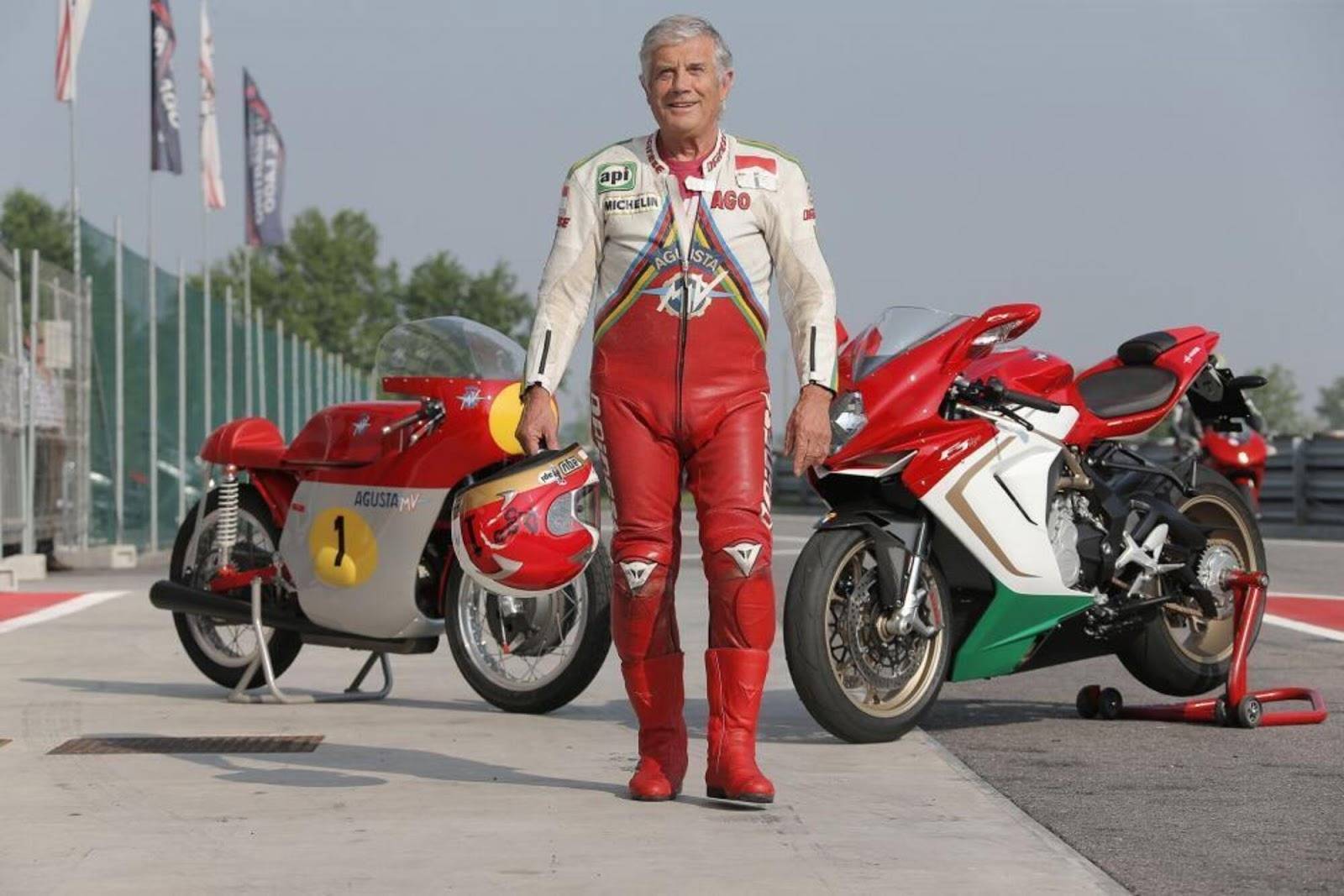
Mike Hailwood, Giacomo Agostini. Although modern MotoGP seldom showcases its own past champions outside of oral-history specials, official content still celebrates Ago’s record — one which remains unequaled to this day across Grand Prix motorcycle racing’s premier class.
There’s a reason why.
Agostini personified what elite motorcycle racing could become at the hands of its most dominant champions. To ride like Ago was to shift the goalposts of “normal” greatness.
Not every era offers legends like Kevin Schwantz. Not every era gives us performances like Jeremy McGrath, Doug Henry, or Toni Mang. But MotoGP’s late-classic years gave us all three — men who could ride a powerful motocross motorcycle up and over anyone.
Add a helmet, and you had world champions.
Chapter III — Literally Twin-throated Monsters: MotoGP’s 500cc Two-Strokes
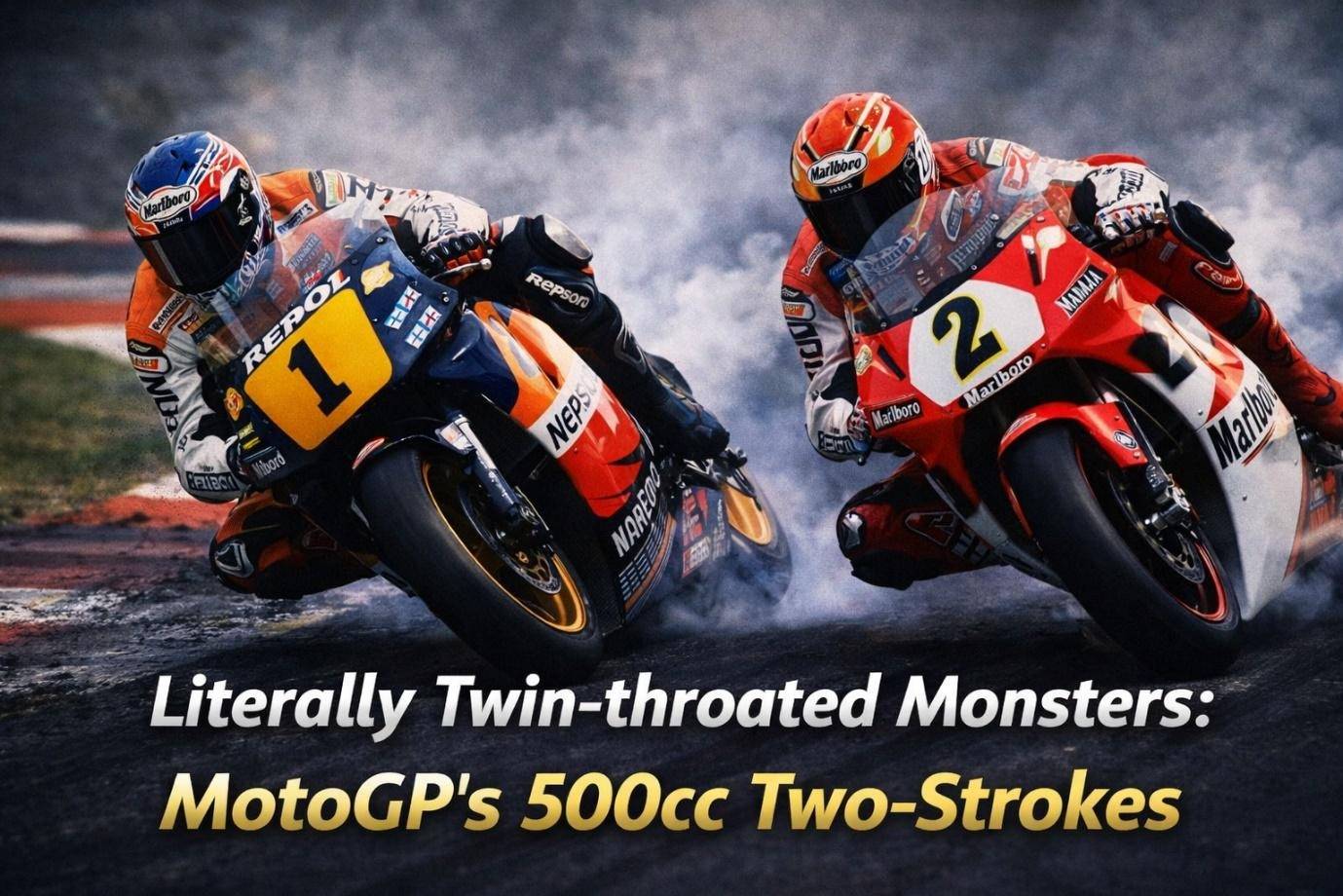
If modern MotoGP races sometimes feel like open heart surgeries (with parts), races through the late 500cc era felt like wolf pits.
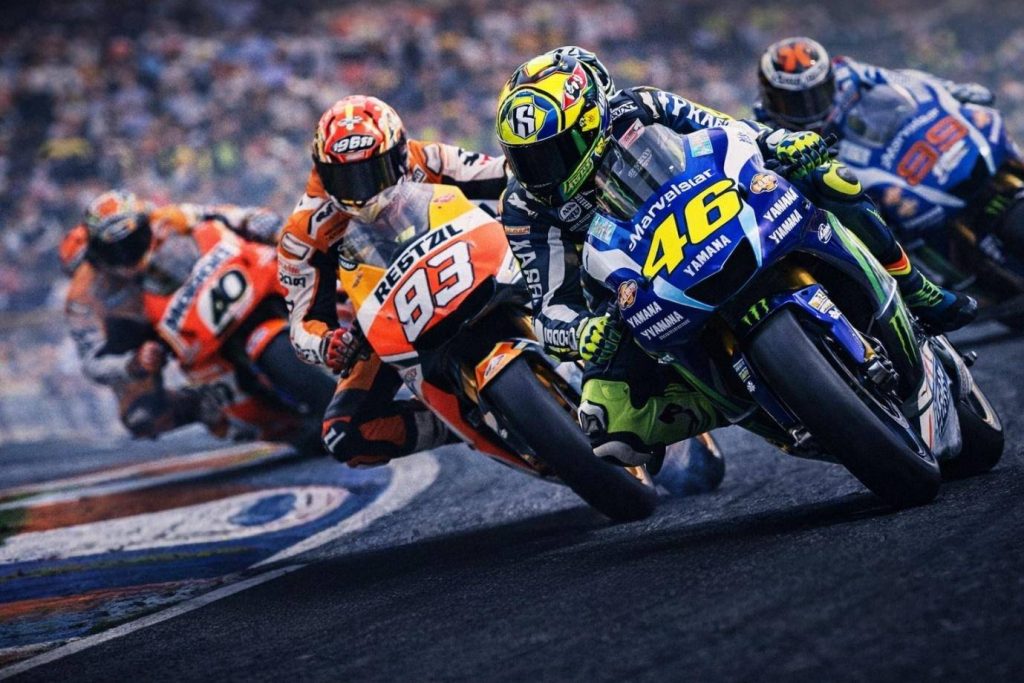
For a time, MotoGP’s premier class was made up of the most brutal naturally-aspirated, twin-throated racing machines the world had ever seen. To ride those machines quick required exquisite throttle control and an intimate sense of when to ride at the limit…and when not to push any farther.
Few bikes in MotoGP history have felt simultaneously more urgent and more barbaric than the previous era’s 500cc two-strokes.
Which makes sense, seeing as MotoGP itself replaced the 500cc class when 800s were introduced in the early 2000s.
Cutting to 500s was a quick-off-the-line challenge. Their power bands could be unforgiving. Riders needed sensitivity as much as they needed courage. Pole position was more than a reward; it almost guaranteed survival. Heroic battles punctuated seasons where beating your teammate was never supposed to be your factory’s top priority.
Of course it was.
500cc racing wasn’t just exciting, it was breathtaking.
Yes, some eras offer greater technical evolution than others. But none compare to MotoGP’s twin-throated past.
Chapter IV — MotoGP: Year Zero (2002)
Everything changes.
When Grand Prix motorcycle racing split away from 500cc two-strokes to reintroduce four-strokes at the top-tier in 2002, the championship officially became MotoGP.
Let that sink in for a moment.
The entire championship. Both rebranded as MotoGP.
That one year served as something of a MotoGP year zero.
Motorcycle racing kept the things that worked. Bikes still entered by factory team. Riders still wore leather. But everything else became a question for the future.
Engine configuration? Sure. Electronics? Definitely.
Eventually, aerodynamics became a talking point too.
People still asked why the rider mattered most — because they did. But Grand Prix racing introduced just as many new protagonists behind the scenes. Crew chiefs became celebrities. Data became part of the storytelling. Mechanics sketched the map and the riders followed their instincts.
The garage became a battle station.
Part science lab. Part thriller novel.
Section IV — Valentino Rossi: MotoGP’s Maestro
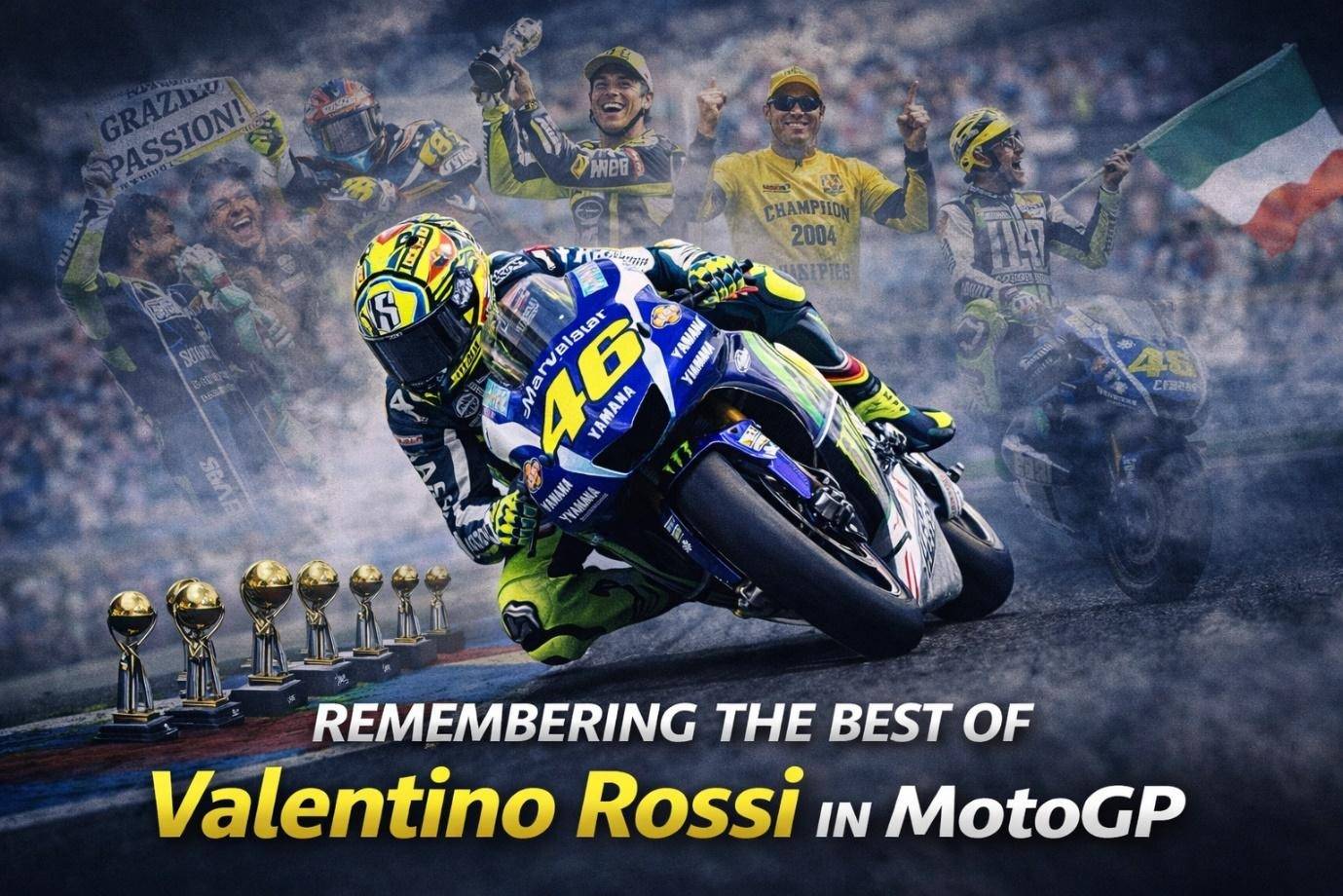
It wasn’t just riding ability that made Rossi a star. It was star quality.
Valentino Rossi could make one shining moment feel like a movie script. He could ride a championship full of elite competitors and give you reasons to cheer whether you were rooting for him or not. Whether he turned the engine key or you.
The Italian still ranks among modern MotoGP’s top draws for reasons beyond ride ability alone. The premier class has never lacked for fierce competitors willing to fight for blood, but Rossi made people care more.
How? By being himself.
Critics complained his stranglehold on MotoGP made the sport less exciting. Supporters pointed to his success as a byproduct of riding excellence. Both agreed on one thing: watching Rossi ride was worth tuning in to see.
With someone like Rossi leading the grid, it’s no wonder MotoGP became must-watch TV around the world.
Formula 1 has copywriters who will argue that motorsport appeals to the masses due to intricate strategy. MotoGP thrives on its own chaos. Close battles. Visible frustration. Drivers throwing lobs of adrenaline at one another while racing line matters by a handful of milliseconds.
Rossi didn’t build that.
He made sure you watched it.
Chapter VI — Welcome to the Modern Era: Aero Is All Around Us
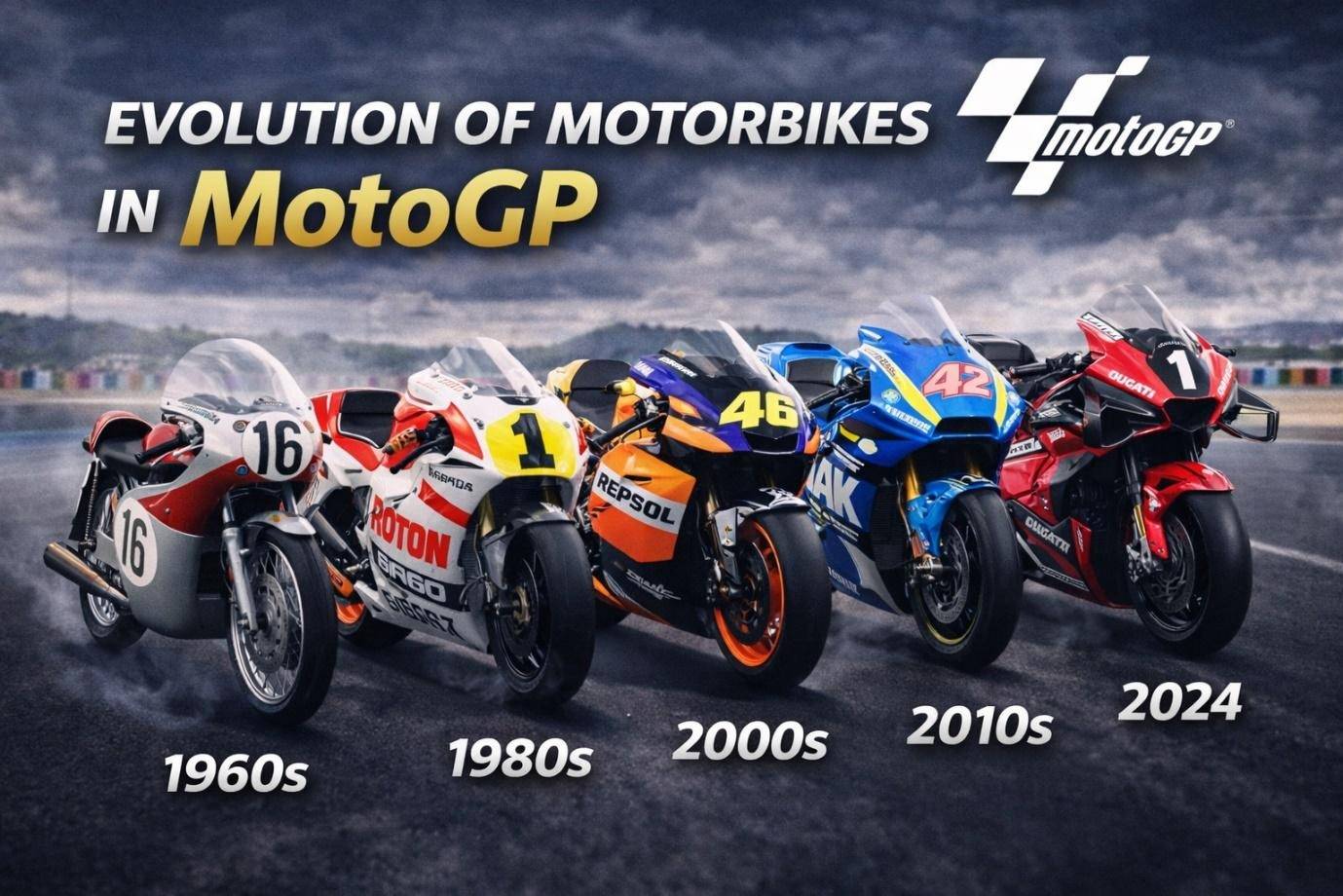
Now, MotoGP bikes resemble something between high-performance drone and powerless miracle.
Software defines advanced electronics. Forged helps chassis development. Wind tunnels unlock aerodynamic suites. And all of those things contribute towards a rider’s ability to out-brake, out-corner, and out-think their opponents by milliseconds.
But while modern MotoGP looks like a lab experiment compared to its analogue past, the heart of motorcycle racing hasn’t changed.
Winning MotoGP today still requires a human being to:
Release the clutch at the right moment.
Trust the bike to keep them upright when physics says they shouldn’t.
Choose between aggression and patience.
Execute when everything is on the line…and hope that they’ve left enough behind for one more push.
You can trace MotoGP history all the way back to its humble beginnings at the Isle of Man and not lose sight of the one constant.
No amount of technology changes the rider’s test.
MotoGP History Feels Alive Because It Still Is
To watch old race footage is to remember what modern MotoGP still emulates:
The courage of those who came before.
The uncontrollable thrill of sliding a rear tire down through corners.
The energy radiating from the moment a starting light goes dark.
Few motorsports can claim a history as rich as motorcycle racing. More importantly, few succeeded in changing the formula without losing what made them watch-worthy.
From 1949 and the birth of motorcycle Grand Prix racing, to two-stroke madness and four-strokes past, MotoGP has grown without leaving the essence of speed behind.
Skill, adrenaline, risk and rivalry.
Remember them.
First time at the TT?
What to know before you go.
For Event List Click Here
SpeedPulse Club for UK and worldwide motorsport events Follow on Facebook